
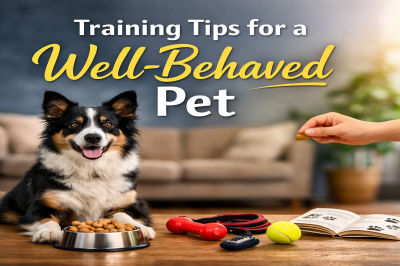
Training Tips for a Well-Behaved Pet

Admin
Blog AuthorGot a dog that thinks your living room is a racetrack and your shoes are chew toys? Yeah… I’ve been there. Training a pet sometimes feels like negotiating with a tiny, furry tornado. But here’s the good news: you don’t need to be a professional trainer to raise a polite, well-behaved pet.
With the right approach, a bit of patience, and some consistency, you can turn your energetic chaos machine into a calm companion. I’ve trained a few dogs myself, and trust me even the most stubborn pups can learn good manners.
So if you’ve been searching for training tips for a well behaved pet, you’re in the right place. Let’s talk about simple, practical strategies that actually work (without turning your home into a military training camp).
Start With Consistency (Your Secret Weapon)
Most people think dog training requires complicated techniques. Honestly? Consistency beats complexity every single time.
Dogs learn through repetition. If you change the rules every day, your dog gets confused. Imagine your boss telling you to do one thing Monday and the opposite thing Tuesday frustrating, right?
How to Stay Consistent
Follow these simple rules:
Use the same commands every time (sit means sit, not sit-down-now-please).
Reward good behavior immediately.
Correct bad behavior calmly, not with shouting.
Make sure everyone in the house follows the same rules.
If your dog hears “no jumping†from you but “aww come here!†from someone else, guess what happens? Yep… chaos.
Consistency creates clarity, and clarity helps your dog learn faster.
Use Positive Reinforcement (Dogs Love Rewards)
Here’s something I learned early while training my own dog: dogs repeat behaviors that earn rewards.
So when your dog sits on command and you give a treat? Boom. You just told your dog, “That was awesome, do it again.â€
Simple Rewards That Work
You don’t need fancy training tools. Use things your dog already loves:
Small treats
Praise (“Good boy!†or “Good girl!â€)
Belly rubs
Favorite toys
This approach forms the foundation of dog training tips for beginners because it builds trust instead of fear.
Ever noticed how dogs respond instantly when you hold a treat? Exactly. Motivation works.
Start Training Early (Especially Puppies)
If you have a puppy, congrats you’ve got the perfect opportunity to shape good habits early.
Training tips for a well behaved pet puppy often focus on early socialization and simple commands.
Puppies learn incredibly fast during their first months. You can teach them:
Sit
Stay
Come
Leave it
No biting
When I trained my first puppy, I started with just 5-minute sessions twice a day. Nothing fancy. The results surprised me.
Why short sessions? Because puppies lose focus quickly. Think toddler attention span… but with more chewing.
Teach Basic Commands First
Before you attempt fancy tricks, focus on the fundamentals.
Basic commands create structure, and structure helps your dog understand your expectations.
Essential Commands Every Dog Should Know
Sit – the easiest command to start with
Stay – helps control excitement
Come – critical for safety
Leave it – stops chewing disasters
Down – encourages calm behavior
These commands form the backbone of how to train your dog to behave.
And here’s a little secret: once your dog learns these basics, everything else becomes much easier.
Keep Training Sessions Short and Fun
Let me share something many trainers agree on: short sessions beat long ones.
Dogs learn faster when training feels like play rather than work.
The 5-Minute Training Trick
If you want a quick win, try this simple routine for how to train your dog in 5 minutes:
Grab a few treats.
Practice one command (like sit).
Repeat it 5–10 times.
Reward every success.
That’s it.
Five minutes later, your dog feels proud, you feel productive, and nobody gets bored. FYI, dogs actually learn better with these mini sessions.
Train Your Dog at Home First
Many people assume they need expensive training classes. Not necessarily.
You can absolutely master how to train a dog at home with basic techniques.
Your home environment offers huge advantages:
Fewer distractions
More frequent practice
Comfort for your dog
Start in a quiet room before moving to more challenging environments like parks or busy streets.
Ever tried teaching a dog “sit†while another dog runs past? Yeah… good luck with that.
Socialization Matters More Than You Think
A well-behaved dog doesn’t just follow commands. They also stay calm around people, pets, and new situations.
That’s where socialization training comes in.
Introduce Your Dog to:
New people
Other dogs
Different environments
Car rides
Household noises
I remember introducing my dog to a vacuum cleaner for the first time. Let’s just say… it didn’t go smoothly :/
But gradual exposure solved the problem quickly.
Confidence reduces bad behavior, and socialization builds confidence.
Correct Bad Behavior Immediately
Timing matters a lot when training dogs.
If your dog chews a shoe and you scold them 20 minutes later, they won’t understand why. Dogs connect actions with consequences only within a few seconds.
Smart Correction Tips
When your dog misbehaves:
Interrupt the behavior immediately
Use a firm “Noâ€
Redirect attention to something appropriate
Reward the correct behavior
Example: If your dog chews furniture, give them a chew toy instead.
This technique works wonders in dog training tips for a well behaved pet because it teaches alternatives instead of punishment.
Exercise: The Hidden Training Secret
Here’s something many pet owners overlook: a tired dog behaves better.
Seriously.
Dogs with excess energy often create their own entertainment—usually involving your furniture.
Daily Exercise Ideas
Walks
Fetch
Tug-of-war
Puzzle toys
Agility games
Regular exercise supports how to train your dog to behave because it reduces hyperactivity.
IMO, a 30-minute walk can fix half of behavior problems.
Avoid Common Training Mistakes
Even well-meaning owners make mistakes during training. I certainly did when I started.
Let’s save you some headaches.
Mistakes to Avoid
Repeating commands too often
Punishing instead of teaching
Training when your dog feels tired
Skipping rewards
Expecting instant results
Training takes patience. Your dog won’t transform overnight.
But small improvements add up quickly.
Build a Strong Bond With Your Pet
Here’s the truth: dogs behave better when they trust their owners.
Training isn’t just about commands. It’s about communication.
Spend time with your dog beyond training sessions:
Play together
Groom them
Talk to them
Reward calm behavior
Your dog doesn’t just want a leader they want a companion.
And honestly, that relationship makes training feel less like work and more like teamwork :)
When to Seek Professional Help
Sometimes behavior problems go beyond basic training.
If your dog shows aggression, extreme anxiety, or destructive habits, consider professional guidance.
A trainer can help with:
Aggressive behavior
Severe separation anxiety
Advanced obedience training
That said, most everyday behavior problems improve with consistent training at home.
Final Thoughts
Training your dog doesn’t require magic tricks or expensive courses. Patience, consistency, and positive reinforcement do most of the work.
Let’s recap the key training tips for a well behaved pet:
Stay consistent with commands
Reward good behavior
Start training early
Keep sessions short
Exercise your dog daily
Correct behavior immediately
Focus on bonding with your pet
Remember, every dog learns at their own pace. Some pick things up instantly. Others… take their sweet time.
But stick with it.
Because one day your dog will sit calmly beside you, ignore the temptation to chew your shoes, and look up like the polite companion you always hoped for.
And trust me that moment feels totally worth it.